


Zynga Poker- Texas Holdem Game
Zynga
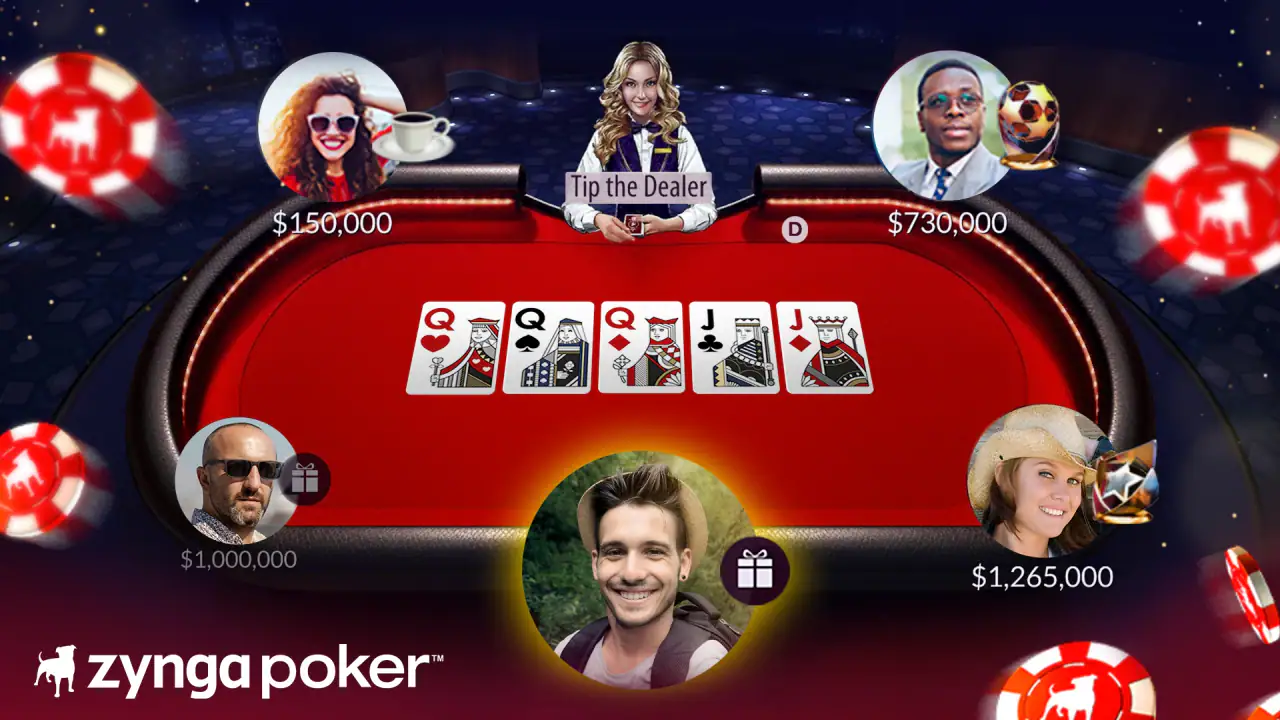
My first impression of Zynga Poker was that it is less intimidating than a real poker table, but still gives you enough decisions to make every hand feel meaningful. It is a free card game from Zynga built around Texas Hold’em, and its long presence on mobile makes it easy to understand why so many players keep returning to it. I found the basic loop simple: join a table, receive two cards, decide whether to fold, call, or raise, and try to build the best five-card hand from the shared cards.
That simplicity is useful for a first-time player. You do not need to know every poker term before sitting down, and the early hands teach the rhythm naturally. At the same time, this is not a quiet puzzle game. It is designed around other players, quick decisions, virtual chips, and the temptation to keep playing after a bad hand. My honest view is that it works best when you treat it as a casual poker room rather than as a way to learn every detail of serious tournament poker.
What to expect when you begin
The game is listed in the card category and carries a Teen content rating. That combination tells you something important about the experience: the rules are familiar and accessible, but the competitive atmosphere can be more intense than a simple solitaire game. I would recommend it to adults and older teens who enjoy bluffing, probability, and short competitive sessions. I would not choose it for a young child or for anyone who wants a completely offline, no-pressure card experience.
The app is free to download, which makes trying it straightforward. However, free access does not mean every part of the experience feels consequence-free. Virtual chips can make wins feel exciting and losses feel frustrating, especially when you are on a poor run. In-app purchases range from $0.29 to $699.99 per item, so I strongly suggest deciding in advance whether you will spend anything at all. For me, the most comfortable approach is to regard purchases as optional entertainment spending, never as a way to recover from losing hands.
The scale of the game is also worth knowing before you install it. It has passed 50 million installs, with an average rating of 4.3 from roughly 2.8 million ratings and about 173 thousand written reviews. Those figures suggest a well-established mobile poker audience, but they should not be mistaken for a promise that every table will suit your style. A large player base can mean more opportunities to play, while also exposing you to a wide range of skill levels and playing habits.
Related News

Why WhatsApp Messenger Still Makes Everyday Communication Feel Easy

Jurassic World: The Game Is the Better Dino Tycoon for Strategic Players

Threads in Real Life: Who Should Join, Lurk, or Leave

How SHEIN Turned Shopping Into an Endless Content Feed

How to Make Fortnite Feel Smarter on Mobile

Should You Switch to Microsoft Outlook on Mobile?
Because the game has been available since December 21, 2010, it feels like a mature product rather than a newly launched experiment. The current version is 23.13.2011, and the listed minimum operating system is Android 8.0. If your device meets that requirement, the practical question is less about learning the controls and more about whether you enjoy the social pressure of making decisions against other people.
The first few minutes are about rhythm, not perfect strategy
When I approach a new table, I do not try to win every hand. That is the fastest way to waste chips and become annoyed. Instead, I watch the pace of the table for a little while. Are players folding often? Are they calling almost everything? Does someone raise aggressively before the flop? Even a short period of observation helps me understand whether I am sitting among cautious players or people who enjoy large bets.
For a beginner, the most useful early goal is to recognize when folding is a successful decision. A fold does not produce a dramatic result, but it protects your stack when your starting cards are weak or when the shared cards make your chances uncomfortable. In this game, patience is more valuable than pressing a button simply because it is your turn.
Gallery
Setting up a sensible first session
The initial setup should be treated as part of your strategy. Before joining a serious session, I recommend checking the interface slowly and locating the controls for folding, calling, and raising. The exact placement matters less than developing the habit of looking at your cards, the current bet, and the community cards in that order. Rushing because the table is moving quickly is a common source of avoidable mistakes.
I also suggest beginning with the smallest comfortable stakes available inside the game. That gives you room to make ordinary beginner errors without turning one poor decision into a major setback. I do not see value in trying to prove that you belong at a larger table immediately. A player who understands the flow of a modest table will usually make better decisions later than someone who jumps into a demanding setting with no routine.
One useful habit is to set a session limit before you start. For example, decide that you will stop after a certain amount of time, after a fixed number of hands, or when your chip balance reaches a personal boundary. This is especially helpful because poker produces frequent near-misses: a promising draw, a nearly completed hand, or an opponent who appears beatable. Those moments can make “one more hand” feel reasonable even when you are already tired.
Notifications and interruptions can also affect your decisions. If you are playing while commuting, waiting for an appointment, or taking a short break, choose tables and sessions that you can leave without feeling trapped by the action. My everyday use case is a ten-minute break: I play cautiously, avoid chasing losses, and stop when the break ends. That makes the game relaxing. Playing it during work or while multitasking has the opposite effect because a missed turn can damage a hand you were not watching properly.
What a new player should understand about the cards
Texas Hold’em gives each player two private cards, followed by shared cards placed in stages. Your final hand uses the strongest five-card combination available from those cards. You do not need to memorize every probability to begin, but you should understand the difference between a made hand and a draw. A pair is already a hand; four cards toward a flush or straight are possibilities that still need help from later cards.
This distinction prevents one of the most common beginner errors: treating a promising draw as if it were already a winning hand. When the cost of continuing is small, calling may be reasonable. When another player raises heavily, the same draw may no longer justify the risk. I try to ask myself, “What am I actually holding right now?” before thinking about what I hope to receive.
Position also changes the value of information. Acting later in a betting round lets you see what other players do before making your choice. If several players check, I may feel more comfortable checking behind them with a marginal hand. If someone raises strongly before my turn, I need a better reason to continue. This is a small strategic adjustment, but it makes the game feel much less random.
Finding your first meaningful success
For a first-time user, meaningful success should not mean winning a huge pot. I would define it as completing a hand without making a rushed decision, correctly identifying why you continued, and leaving the table with your chips and confidence intact. That sounds modest, but it gives you a repeatable process instead of relying on luck.
My preferred first-session plan is simple. I wait for a starting hand that is easy to evaluate, avoid calling just because I have already invested chips, and pay attention to how the community cards change the situation. If I make a decent hand, I do not automatically assume it is unbeatable. If the board becomes dangerous and another player shows strength, I am willing to slow down or fold.
One practical tip is to separate the emotional result from the quality of the decision. You can make the correct call and still lose because another player receives a better card. You can also make a poor call and win by accident. If you judge yourself only by the outcome, the game teaches bad habits. I get more useful feedback by asking whether I had a sensible reason for each action.
Another overlooked skill is keeping the size of the pot in perspective. A small hand does not need a heroic defense. If the pot is modest and the betting becomes uncomfortable, folding can preserve your ability to play a better opportunity later. Conversely, when you have a strong hand, timidly calling every time may give opponents cheap chances to improve. The balance between protection and value is where the game becomes more interesting than simply waiting for aces.
When you win your first substantial pot, resist the urge to immediately increase your risk. A single successful hand may come from good play, luck, or both. I prefer to use it as confirmation that I followed my process, then continue at the same level. Consistency matters more than celebrating one result.
Common confusion and friction points
The biggest confusion for beginners is often not the poker rules but the difference between available actions. Calling matches the current bet, raising increases the amount others must match, and folding ends your participation in that hand. If you are unsure, folding is usually less damaging than making a large raise without understanding why. The interface may make an action look easy, but the consequences still depend on the table and the cards.
New players can also misread the community cards. A visible pair on the table may help you, but it may help an opponent too. A completed straight or flush possibility can make an apparently strong pair much weaker. I recommend scanning the board for shared threats before deciding that your own cards are enough. This one-second check prevents many avoidable calls.
The social atmosphere is another adjustment. Some players move quickly, some take large risks, and some appear to play almost every hand. Their behavior can make you feel that you need to match their speed. You do not. A fast opponent is not automatically a skilled opponent, and a quiet table is not automatically a safe one. Staying with your own decision process is more useful than copying the loudest style at the table.
There is also a real difference between playing for free and spending money on virtual items. The free entry makes experimentation accessible, but purchases can create pressure if you connect them emotionally to your results. I would skip spending entirely if you are prone to chasing losses, or if you find it difficult to stop after a frustrating streak. Players who are comfortable treating optional purchases as entertainment may see them differently, but no purchase can replace patience or sound hand selection.
Compared with a physical deck or a local poker night, the mobile format is faster and more convenient. You can play alone with strangers at almost any suitable moment, without organizing a group or finding a table. The trade-off is that the digital setting can feel less personal, and the pace may leave less room for conversation or teaching. Compared with a simple single-player card game, this is more social and strategically demanding, but also less relaxing when the table becomes aggressive.
Compared with dedicated poker training tools, this game is better for repeated practical decisions than for structured lessons. I would use a tutorial-focused resource if my main goal were to study hand ranges, odds, or formal tournament strategy. I would choose this game when I want to practice recognizing situations in motion and make decisions under time pressure. Neither option fully replaces the other.
Who should skip it
I would not recommend it to someone looking for a calm game with no competitive tension. I would also steer away from it if you dislike virtual currencies, repeated sessions, or the possibility of feeling tempted by purchases. The Teen rating is another reason parents should think about whether the competitive card environment is appropriate for a younger player.
It is a weaker fit for people who want a fully offline experience, a story-driven game, or a puzzle with a guaranteed solution. Poker always includes uncertainty, and even excellent decisions can lose individual hands. If that kind of randomness feels unfair rather than entertaining, a traditional strategy game may be a better choice.
Taking the next step without losing control
Once the basic actions feel comfortable, I would focus on one improvement at a time. First, tighten your starting-hand choices. Then watch position. After that, pay attention to bet sizing and how the board changes. Trying to master every concept in one sitting usually creates more confusion than progress. The game gives you plenty of repetition, so gradual improvement suits it better.
A useful advanced workflow is to review memorable hands immediately after a session. You do not need a notebook full of statistics. Just remember one hand where you folded too early, one where you called too long, and one where your decision felt clear. Ask what information you had at the time, rather than judging the hand only by its final card. This turns casual play into deliberate practice.
I also like changing my goal depending on the session. During a short break, my goal may be to avoid impulsive calls. During a longer session, I may focus on observing opponents before entering pots. This keeps the game from becoming a repetitive chase for wins. It also makes it easier to stop, because I can finish a session successfully even without ending with the largest stack.
For players worried about device compatibility, the listed minimum is Android 8.0, and the current release is 23.13.2011. That gives you a clear starting point for checking whether your phone or tablet is suitable. The developer is Zynga, a name closely associated with social games, and the app’s long availability indicates that it is intended for an ongoing audience rather than a one-time playthrough.
After spending time with it, I see Zynga Poker as a convenient way to practice the feel of Texas Hold’em while enjoying quick competitive sessions. Its strongest quality is the combination of approachable rules and enough uncertainty to keep ordinary hands interesting. Its main weakness is the same thing: the fast, competitive loop can encourage impatient play, and the presence of optional purchases means self-control matters.
My recommendation is straightforward. Install it if you want a recognizable poker format, can accept that luck will affect individual hands, and are willing to set boundaries around time and spending. Start small, learn to fold without embarrassment, and measure success by the quality of your decisions. If you do that, the game becomes a satisfying mobile card table rather than a frustrating attempt to win every hand.
FAQs for Zynga Poker- Texas Holdem Game
What features make Zynga Poker stand out from other poker games?
Zynga Poker offers a realistic Texas Holdem experience with features like live tournaments, high-stakes tables, and daily challenges. The game's social aspect allows you to connect with friends and compete against players from around the world. Its user-friendly interface and detailed graphics enhance the overall gaming experience.
Is Zynga Poker free to play, or are there in-app purchases?
Zynga Poker is free to download and play, offering a range of features at no cost. However, it includes in-app purchases that allow players to buy chips, special items, and other enhancements. These purchases can enhance gameplay but are not necessary to enjoy the game.
Can I play Zynga Poker offline?
No, Zynga Poker requires an internet connection to play. The game is designed for live interaction, allowing you to compete against other players in real-time. This connectivity is crucial for participating in tournaments, joining tables, and engaging in the social features the game offers.
How does Zynga Poker ensure fair play and prevent cheating?
Zynga Poker employs robust security measures to ensure fair play. The game uses a certified random number generator to deal cards, ensuring that outcomes are random and unbiased. Additionally, Zynga monitors for suspicious activity and has systems in place to detect and prevent cheating.
What platforms are supported by Zynga Poker, and how can I download it?
Zynga Poker is available on both Android and iOS platforms. You can download it from the Google Play Store or the Apple App Store. The game is also accessible via Facebook, allowing for seamless integration and play across different devices.
Pros
- Wide range of table stakes available.
- Smooth and intuitive user interface.
- Frequent updates with new features.
- Large community for multiplayer games.
- Engaging daily challenges and rewards.
Cons
- In-app purchases can be pricey.
- Occasional connectivity issues.
- Limited offline play options.
- Ads can be intrusive at times.
- Steep learning curve for beginners.


